Mohand Range -
Great Hornbill,
Birds & Shivalik Views
India's largest hornbill soaring over Shivalik canopy. 150+ forest bird species. Regular Asian elephant sightings. Scenic ridgeline views to the Himalayan foothills. 35 km from Dehradun - the most accessible Rajaji zone for Doon Valley visitors.
What Makes Mohand Range Special?
Mohand Range occupies the northern section of Rajaji National Park, straddling the boundary between Haridwar and Dehradun districts along the Shivalik hills. Its unique position - at a higher elevation than Chilla or Motichur - means the forest is a dramatic mix of sal, chir pine, oak, and mixed deciduous species that support a distinctly richer bird community than the lower zones.
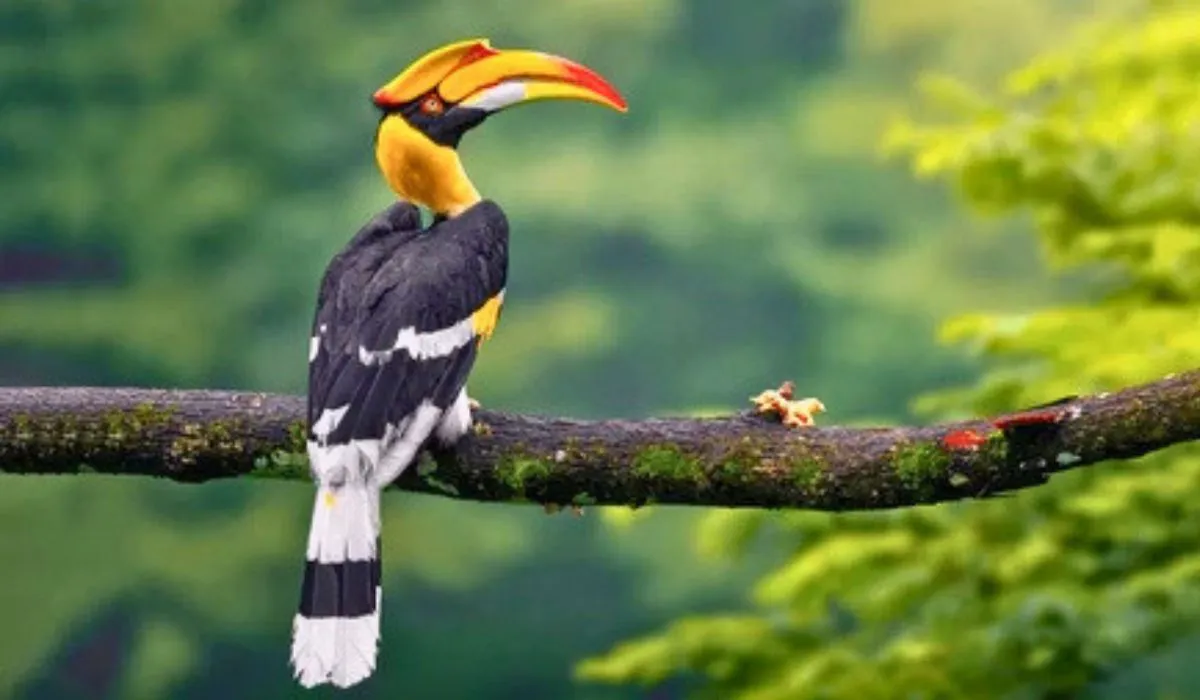
The zone's signature species is the Great Pied Hornbill - India's largest hornbill. The distinctive yellow-and-black casque, loud wingbeats audible from 200 metres, and spectacular size make this one of India's most impressive birds. Mohand Range's mature old-growth forest provides the large tree cavities that hornbills require for nesting - something increasingly rare elsewhere.
Beyond birds, Mohand Range offers regular Asian elephant sightings as herds move through the zone on the wider Rajaji–Corbett elephant corridor. The open ridgeline sections of the safari route provide panoramic Shivalik views that are genuinely scenic even on a quiet wildlife day.
Great Pied Hornbill - India's Largest Hornbill
The Great Pied Hornbill is one of India's most spectacular birds and Mohand Range is the best place in Rajaji to see it. Understanding this extraordinary bird makes the sighting far more meaningful.
Vulnerable
India's Largest
Time
in Rajaji
The Great Pied Hornbill (Buceros bicornis) is one of Asia's most iconic forest birds. Its hollow yellow-and-black casque - the distinctive helmet-like growth on its bill - amplifies its calls and plays a role in mate selection. Adults can weigh up to 4 kg, making every flight an event: the whooshing wingbeats are audible from 200 metres through the forest.
Great Pied Hornbills are entirely dependent on large old-growth trees for nesting. The female seals herself inside a tree cavity using droppings, mud, and food matter - leaving only a slit through which the male feeds her and the chicks for weeks. This extraordinary nesting behaviour makes them extremely sensitive to forest degradation - old mature trees are essential for their survival.
- Listen for the loud whooping call at dawn - carries over 1 km through forest
- Look for large fruiting fig and Ficus trees - prime feeding habitat
- Watch for gliding flight between canopy gaps - unmistakable silhouette
- Early morning 6–8 AM is peak feeding activity in the canopy
- Pairs are often seen together - they mate for life and stay paired year-round
150+ Species - Mohand's Forest Birdlife
Mohand Range's mixed forest supports a far richer bird community than the lower Chilla zone. For birders, a dawn walk through the forest edge near the gate before safari start is incredibly productive.
India's largest hornbill. Spectacular yellow-black casque, loud wingbeats audible from 200m. Pairs seen year-round in old-growth forest. Best in early morning at fruiting trees.
Magnificent pheasant of the Himalayan foothills. Males have glossy blue-black plumage with red facial wattles. Seen on forest floor and undergrowth near the ridgeline sections of the safari route.
Spectacular sky-blue and chestnut bird with a long tail and yellow bill. One of the most visually striking birds in Rajaji. Common in the mixed forest of the higher Mohand terrain.
Loud piercing call announces its presence before it's seen. Large raptor with distinctive crest. Found across all Rajaji zones but particularly visible on the open ridgelines of Mohand.
More Birds at Mohand Range
Animals Beyond Birds - Mohand Range Wildlife
Mohand Range's mixed forest and higher elevation support mammals and reptiles not found in lower zones.
Closest Rajaji Zone to Dehradun
If you are based in Dehradun or arriving via Jolly Grant Airport, Mohand Range is your logical Rajaji safari zone. It is 35 km from Dehradun city - significantly closer than Chilla Zone (55 km) or Motichur Zone (45 km).
Dehradun visitors can do a morning safari starting at 5:30 AM, return to Dehradun by 10–11 AM, and continue with their day. Combine Mohand Range with a visit to Rajaji's buffer zone, a walk in Robber's Cave, or an afternoon at the Forest Research Institute - all within Dehradun.
For visitors arriving via Delhi by flight (Jolly Grant Airport is 12 km from Dehradun city), Mohand Range safari can be done on Day 1 before proceeding to Rishikesh or the hills.
How to Reach Mohand Range Gate
Mohand Range is accessible from both Dehradun and Haridwar on the NH-58 corridor, making it the most conveniently located zone for visitors arriving from either city.
From Dehradun (35 km)
- Take NH-58 from Dehradun towards Haridwar
- Follow signs for Mohand / Rajaji National Park before reaching Haridwar
- Gate is on the left side of NH-58 approaching from Dehradun
- Taxi from Dehradun: ₹700–1,000 · 45–50 minutes
From Haridwar (35 km)
- Take NH-58 towards Dehradun (not towards Rishikesh)
- Mohand Gate is ~35 km from Haridwar towards Dehradun
- Taxi from Haridwar: ₹600–800 · 45–55 minutes
- Further than Chilla - Haridwar visitors may prefer Chilla or Motichur
From Jolly Grant Airport (28 km)
- Exit airport and take NH-58 towards Haridwar
- Mohand Gate is approximately 28 km from the airport
- Pre-arranged taxi from airport: ₹700–900
- Ideal for Day 1 arrival itinerary from Delhi by flight
Book Your Mohand Range Safari
Mohand Range Prices 2026
- Entry fee (Indian adult): ₹150/person
- Jeep safari (Indian): ₹2,500/vehicle (max 6)
- Entry fee (Foreign): ₹600/person
- Jeep safari (Foreign): ₹4,500/vehicle
- DSLR permit: ₹200 (Indian) / ₹500 (Foreign)
Birding Tips for Mohand
Bring binoculars (8x42 minimum) and arrive at the gate by 5:30 AM. The 20 minutes before safari start - standing at the forest edge near the gate - are often more productive for birds than the first hour inside. Listen for hornbill calls in the canopy from 6–8 AM. Carry a field guide: Mohand has many species not found in lowland zones.
Ideal For
- Dehradun-based visitors - closest Rajaji zone
- Dedicated birders seeking forest interior species
- Airport transit day - safari before Rishikesh/hills
- Photographers: Great Hornbill in flight shots
- Returning visitors completing all 5 Rajaji zones
Mohand Range FAQ
Book Mohand Range Safari Today
Great Pied Hornbill in the canopy at dawn. Elephants on the corridor. Scenic Shivalik views. WhatsApp for instant availability.
Available 7 AM – 9 PM · All Zones → · Prices →